

The Hard Drive Isn't Dead. And It May Be the Smart Buy Again.
AI shines a light on the traditional spinning disc


Most of you reading this newsletter have experience with the spinning disk hard drive, the slow, loud computer accessory which expands the amount of room we have to store our stuff.

Over the last five years, a new kind of drive became so popular that many of us stopped buying the spinning disk drive. The Solid State Drive (SSD) had no moving parts, and thus was less likely to crash and break, and was so tiny, we could tote it anywhere.
Then came AI.
The AI revolution has been great for helping us answer questions, look up stuff and automate tasks. But to operate the AI tools, companies have snapped up so much memory that companies have responded by jacking up prices.
The prices of computers, laptops, Solid State Drives, iPads and other products needing memory have gone through the roof. Apple recently dramatically hiked up rates of basically everything it sells but the iPhone, and in September the company is expected to start charging way more for the next iPhones. Ditto for Google with new phones it will debut in August.
But nowhere have the price hikes been as huge as for SSDs.
In January, 2025 I purchased a Samsung T7 SSD with 2 terabytes of storage for $166. You know how much it costs now? How about a 222% price increase, or 3.2 times more than I paid a year and a half ago, now at $534.
If you think that’s bad, how about the 4 TB Samsung T7 version I bought in October, 2024 for $260. Today it’s $899!!!
Prices have gotten so out of whack, that I began looking at the traditional, spinning disc again. Sure they always were relatively slow and noisy, but maybe not that bad after all? Maybe not for editing video, but certainly for storing video and photo files.
I’ve always liked the LaCie Rugged series of drives, which claim to be shockproof and waterproof. I bought a 4 TB version in February for $149, which was a sweet deal—perhaps Amazon was having a special, I don’t remember. Today it’s higher at $189, but that sounds a lot more reasonable than the $900 T7 with similar capacity.
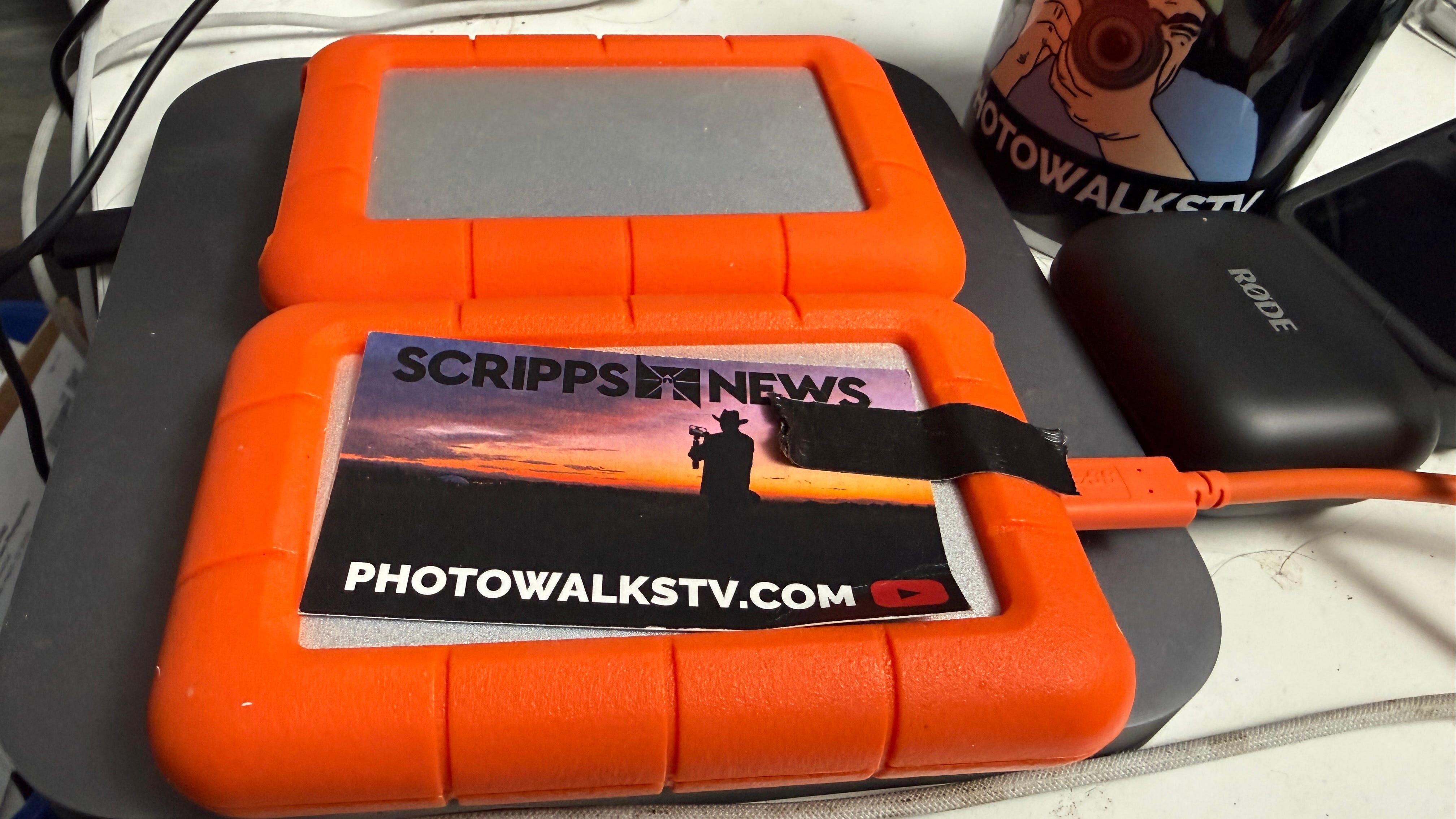
I’ve turned to the LaCie for video editing, and frankly, while there’s a little slowdown, it’s just that, a little slower, not drastically unusable. For the price differential, I could live with it.
We interrupt this rant to remind you about the importance of backup. Most people now take most of their photos and videos on their phones, and just leave them there, hoping they’re protected by having them with Apple’s iCloud or Google Photos.
To which I say—what if they had a poor connection, and not all of the images were truly copied onto the cloud? (This has happened to me so many times.) What if you lost your phone?
This is why experts preach the 3-2-1 rule, which means that you should back up to the cloud, yes, and have two physical backup places as well, one at home and one offsite. That’s protection.
At $534 for a 2 TB drive, that $9.99 monthly from Apple and Google for 2 TB of cloud storage sounds pretty good, right?
But what if you upload everything you own to Apple and Google and they decide to dramatically raise the online pricing? You’re kind of stuck. Are you going to download all your images in protest?
We’ve had it good for so many years. The prices of drives went down in price, not up, as capacity also increased. That’s why I have on my desk two 8 TB drives, a 22 TB drive and a huge 72 TB NAS system. But you’re not me and I don’t expect you to need as much backup as I do.
Meanwhile, experts don’t see memory prices falling back to earth anytime before 2028 as those hungry data centers snap up everything available.
If you have a modern phone and you read this newsletter, you need a new drive. Maybe not today, but certainly in the coming months. We generate too many new images not to need a place to back them up.
Here are the best drive deals I found this week:
LaCie 4 TB Rugged drive, $189:
Seagate 8 TB drive (note: these are great for keeping on the desk and not moving the, around like you can do with the LaCie Rugged series.) $289
Lexar 1 TB SSD, $199 (if you need the speed and size of an SSD drive, this one snaps onto the back of your iPhone or Android case with MagSafe.)
The iPhone Kept on Filming
A woman on vacation in Greece was filming on a boat when her iPhone 16 Pro fell into the water, some 20 feet below the sea. A friend, an experienced diver, went in and retreived it.
To her amazement and others around her, the entire 11-minute drop and view of the fishes had been filmed. The phone just happened to land at the bottom of the sea, with camera facing up, so it was able to capture everything.
“When I received the phone, I saw that it was not damaged at all,” Lyal Farhat told an Israeli news site. “I just took a towel, dried it, and that’s it — it worked.”
Modern iPhones are classified as water-resistant, not waterproof, which basically means that you can dunk it in the water, but not much more. You’re not supposed to go deep, and in fact, Apple recommends against swimming with it.
I’ve produced two videos showing young kids taking my iPhone in a pool, and having fun taking underwater selfies. Like Farhat, I dried the phone off and it charged right up again. I’ve dangled iPhones in fountains, and dunked it in the ocean on shoots, just to show what was possible.
While you may not want to do this with an expensive $1,000 phone, clearly you can get cool underwater shots with the iPhone, Galaxy and Pixel.
Use Your Instagram Photos to Train Meta AI?
That didn’t last long! Earlier in the week Meta’s Instagram account hid a new setting in your profile that allowed the company to use your public uploaded photos to train its AI if you’re mentioned in a prompt.
There was a predictable outcry and many, many service pieces on how to turn this default feature off.
Friday afternoon, Meta switched direction and turned it off for all of us.
In a statement to Dylan Byers of Puck News, the company said, “Earlier this week, we announced that one way for people to generate images in Meta AI is by @-mentioning public Instagram accounts that they want to reference. Our intent was to provide a useful creative tool and to give people control over whether their public content could be referenced in this way. We've heard the feedback that this feature missed the mark, so it's no longer available.”
The power of the people to affect change!
We’re off to Juneau Sunday
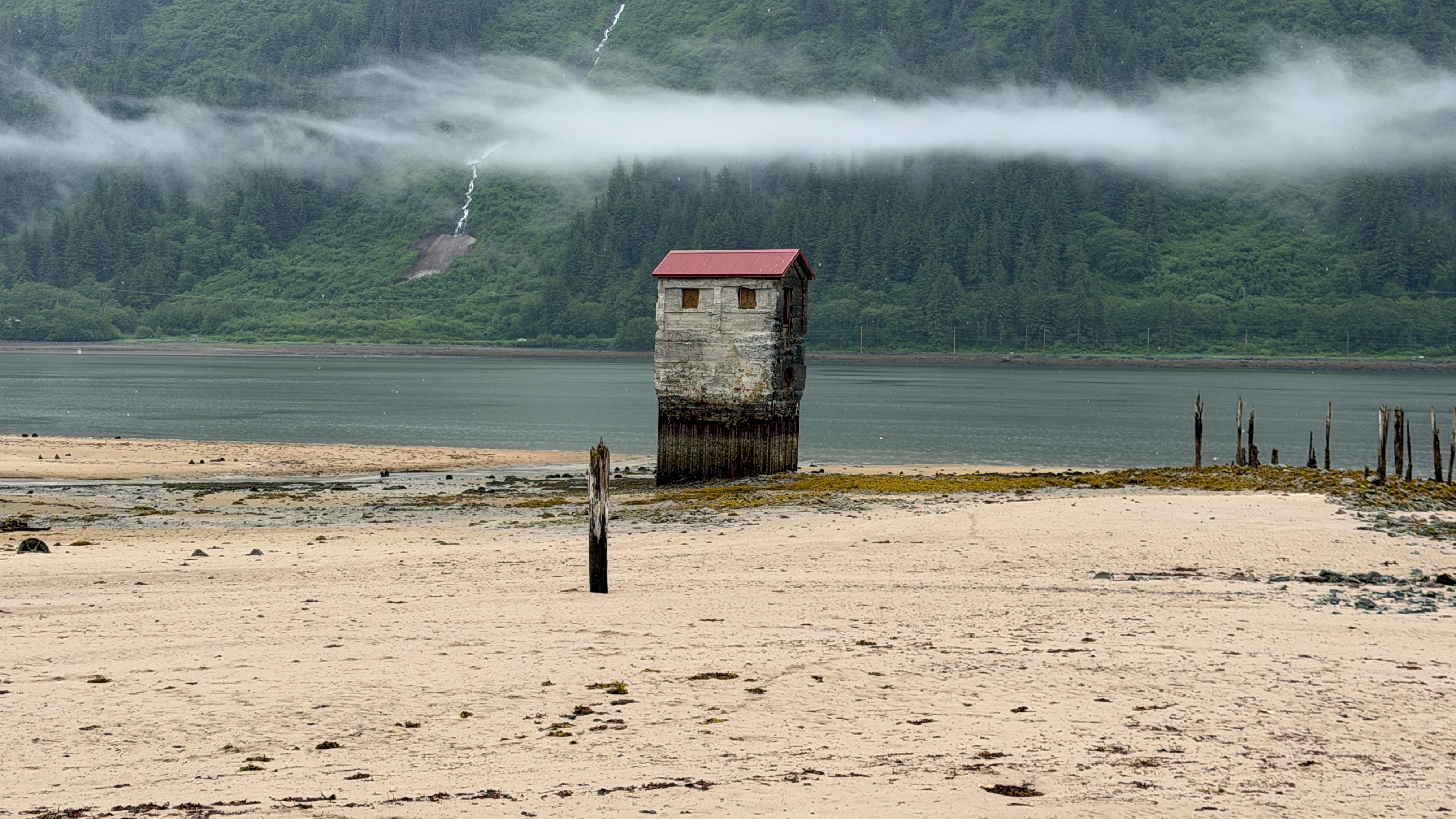
The Alaskan Photowalks adventures continue this week with Part 2 of our series, as we visit the capital city of Juneau, the only capital city you can’t drive to on the highway—the only options are boat or flying in. Join us as we take a float plane to a remote Juneau island, go walking through the rain forest with a local photographer and best of all—meet lots of the great folks who live in Juneau for a real taste of what Alaskan life is all about.
The show debuts Sunday at 10 a.m. ET and 10 p.m. ET on Scripps News, and will be available via replay on YouTube shortly thereafter.
Thanks as always for taking the time to read, watch and listen. If you enjoyed today’s newsletter, please share with everyone you know!
Jeff