

Two Days in Louisville: Bourbon, Victorians, Baseball & the Kentucky Derby
Small Southern city will keep you busy exploring!

Louisville may be best known for three things: bourbon, the Kentucky Derby and the Louisville Slugger. But give yourself two days here and you'll find much more, including one of the country's great collections of Victorian homes, the legacy of Muhammad Ali, some terrific walkable neighborhoods and, of course, plenty of Kentucky bourbon.
Louisville is also an easy city to add to a Midwest or Southern road trip. It’s about 90 minutes from Cincinnati, two hours from Indianapolis and three hours from Nashville.
Here’s how I’d spend two days.
DAY 1: OLD LOUISVILLE, DOWNTOWN & NULU
I’d begin somewhere that has nothing to do with bourbon or horse racing: Old Louisville.
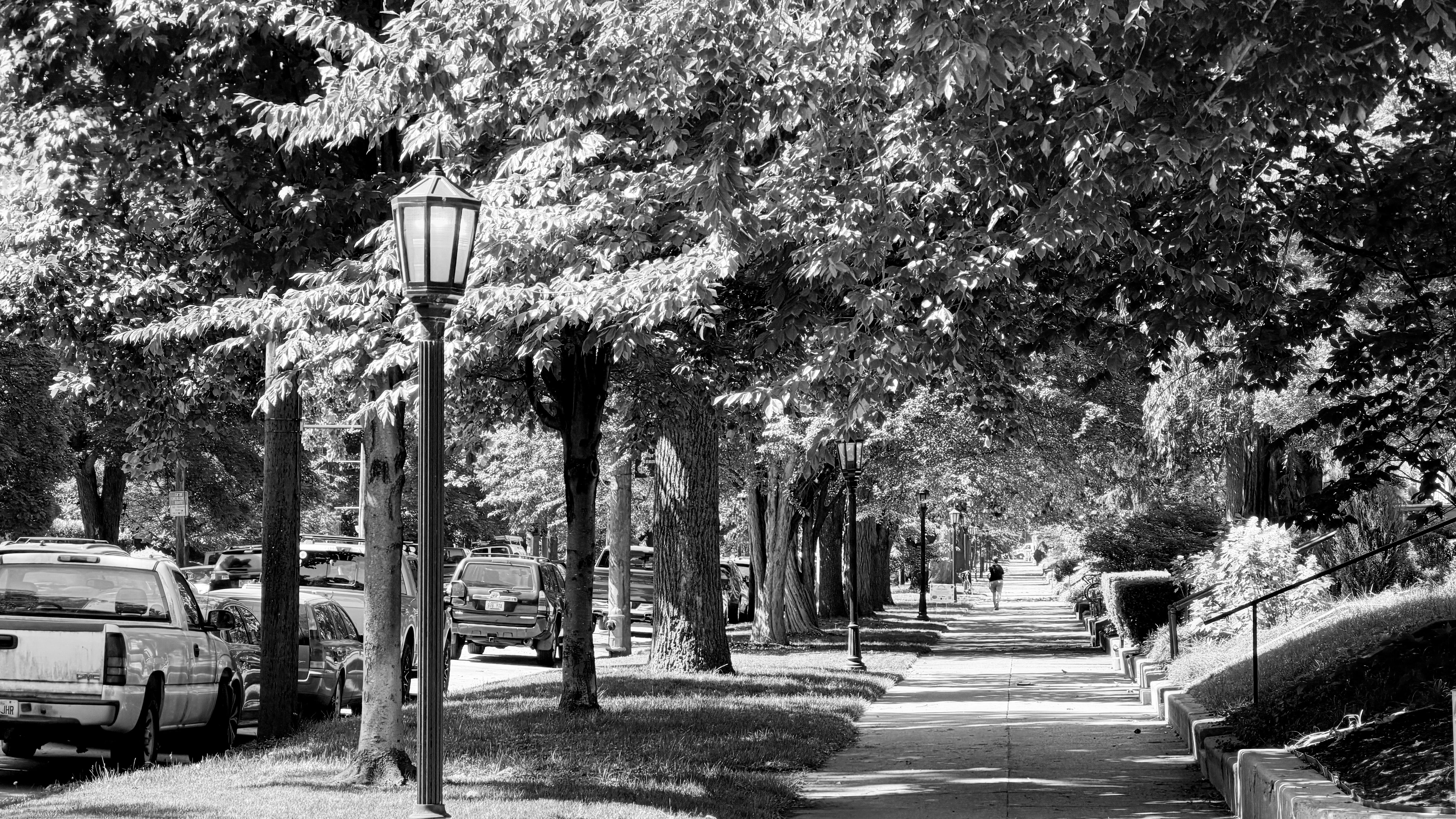
This was one of the biggest surprises of my visit. The neighborhood has roughly 1,400 structures, many dating to the 1880s and 1890s, and is considered one of the largest collections of preserved Victorian homes in the country.
Give yourself at least an hour or two to wander. You’ll see everything from Queen Anne homes to Richardsonian Romanesque, Italian Renaissance Revival and Victorian Gothic architecture.
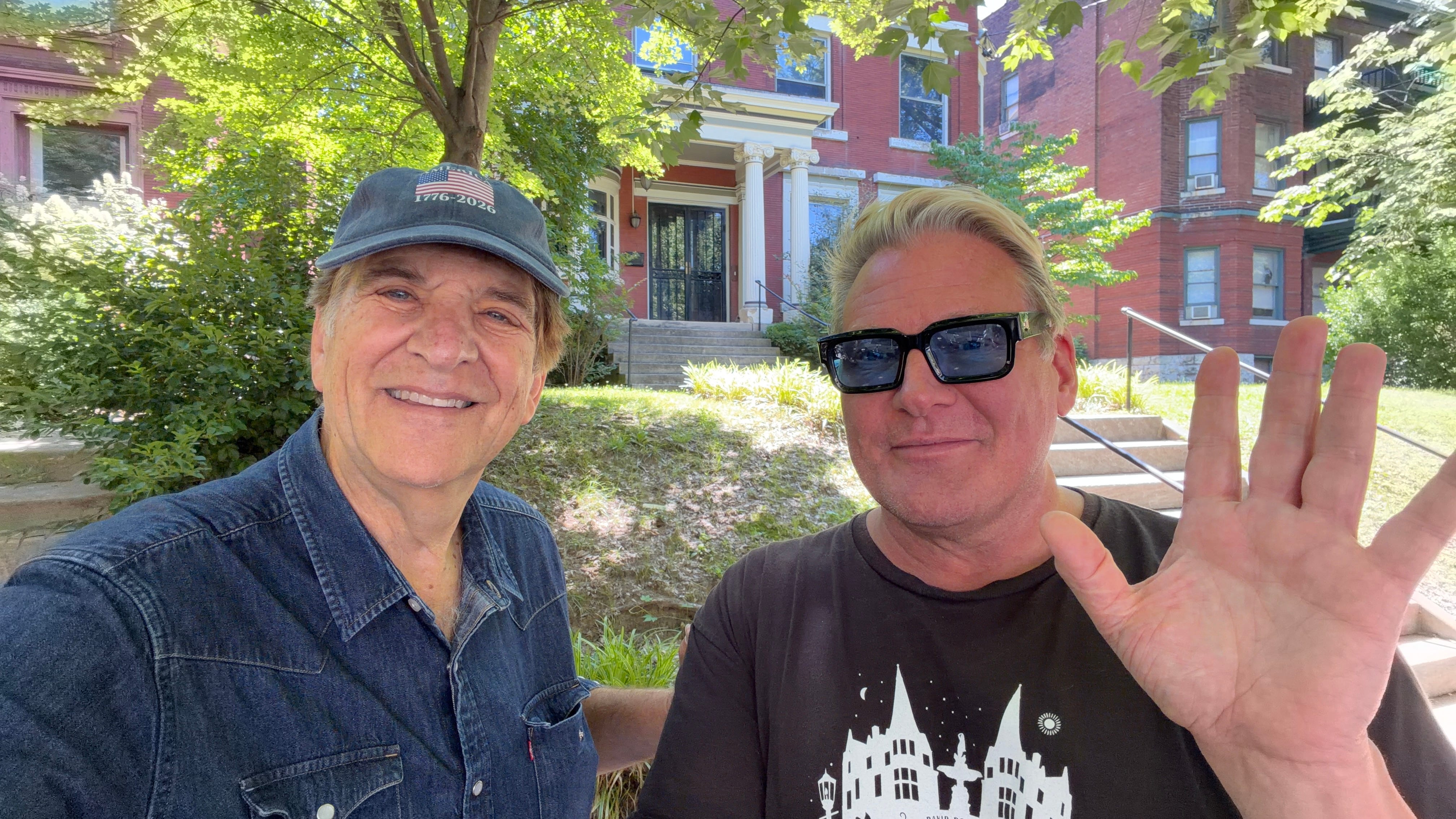
We highly recommend signing up for a tour. We worked with David Domine of Louisville Historic Tours, who is featured in the Photowalks video. The company’s history and architecture walking tours begin near 1300 S. Fourth Street, at Fourth Street and West Ormsby Avenue. (Besides being a tour guide, David is also an author who wrote the acclaimed A Dark Room in Glitter Ball City, which has been adapted into an HBO documentary.)
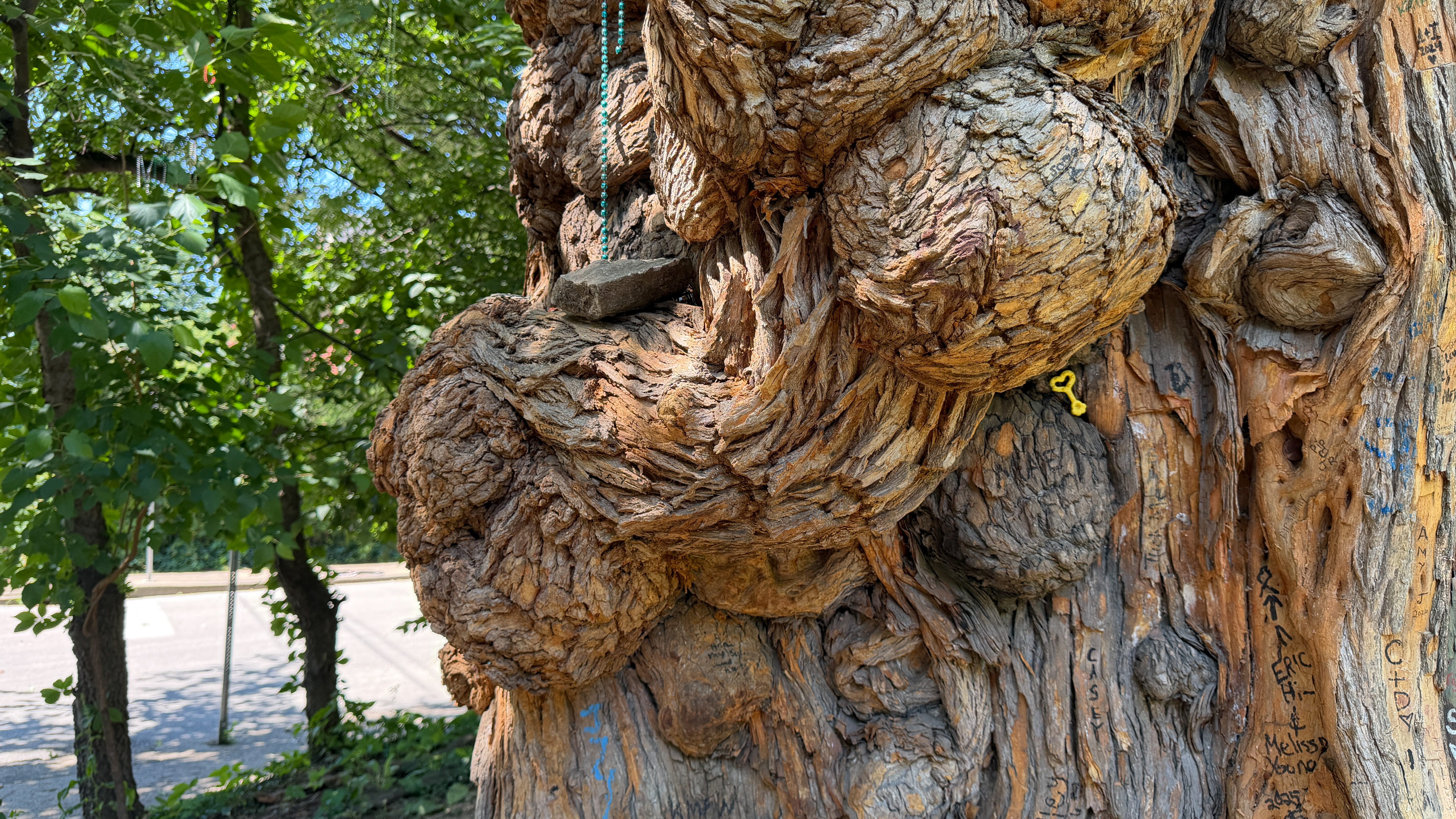
Make a detour to 6th and Park — 600 W. Park Avenue — for the wonderfully strange Witches’ Tree. Local legend says witches once gathered at this corner, and the location has been associated with occult lore for more than a century. David told us about it as if it were fact, then admitted it was a myth, but a myth with at least a kernel of truth in there.
Stop 2: Head downtown
From Old Louisville, head downtown about 1.5 miles toward Whiskey Row and Louisville’s museum district.
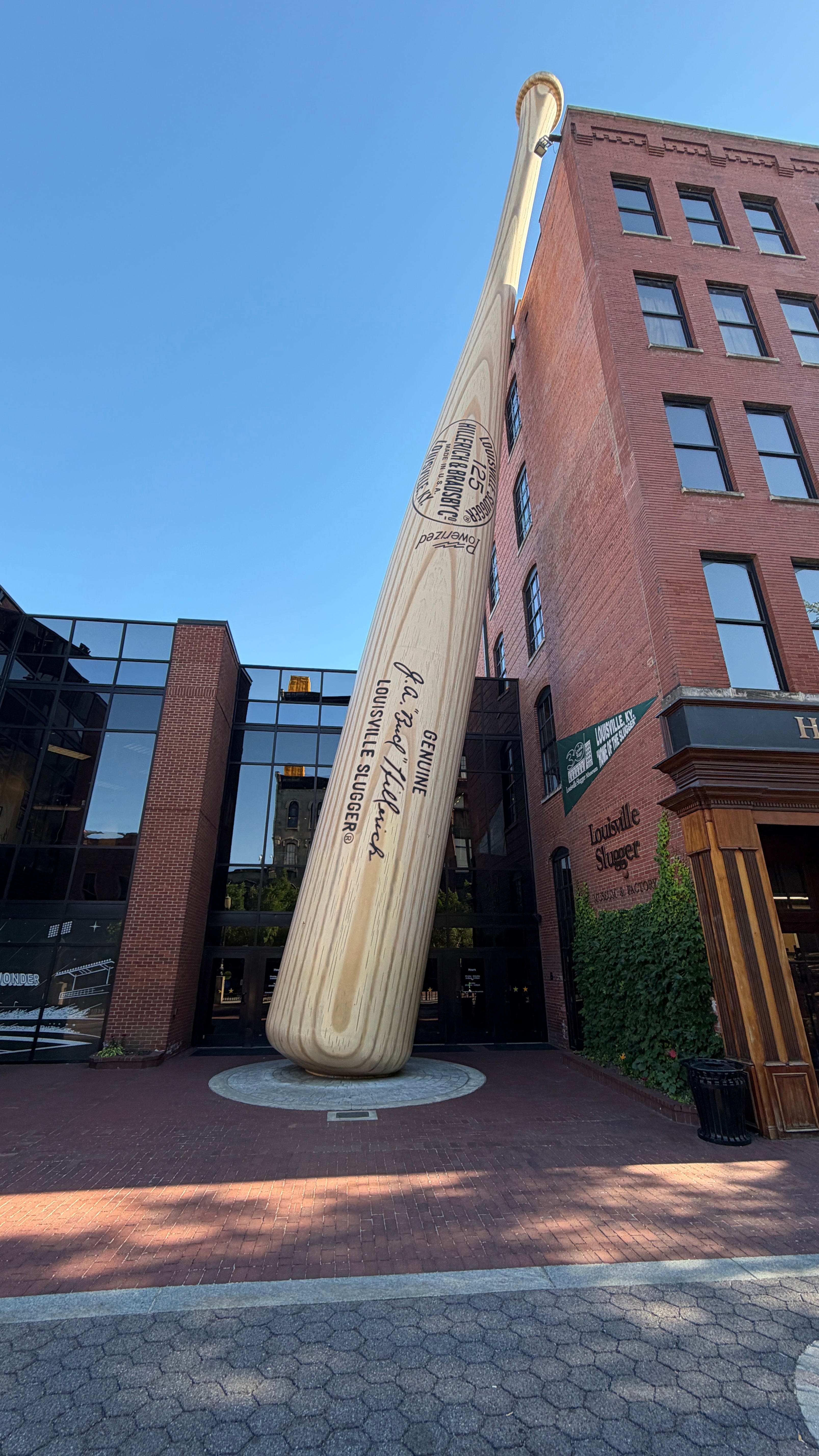
Even if you’ve never swung a baseball bat in your life, it’s hard to miss the Louisville Slugger Museum & Factory at 800 W. Main Street. Outside is a gigantic replica of Babe Ruth’s bat weighing 68,000 pounds. It’s one of those wonderfully oversized roadside-attraction-style photo ops.
From there, it’s just a few blocks to the Muhammad Ali Center at 144 N. Sixth Street, devoted not only to Ali’s boxing career but also to his civil rights activism, humanitarian work and philosophy. Ali was born in Louisville, and his presence is felt throughout the city.
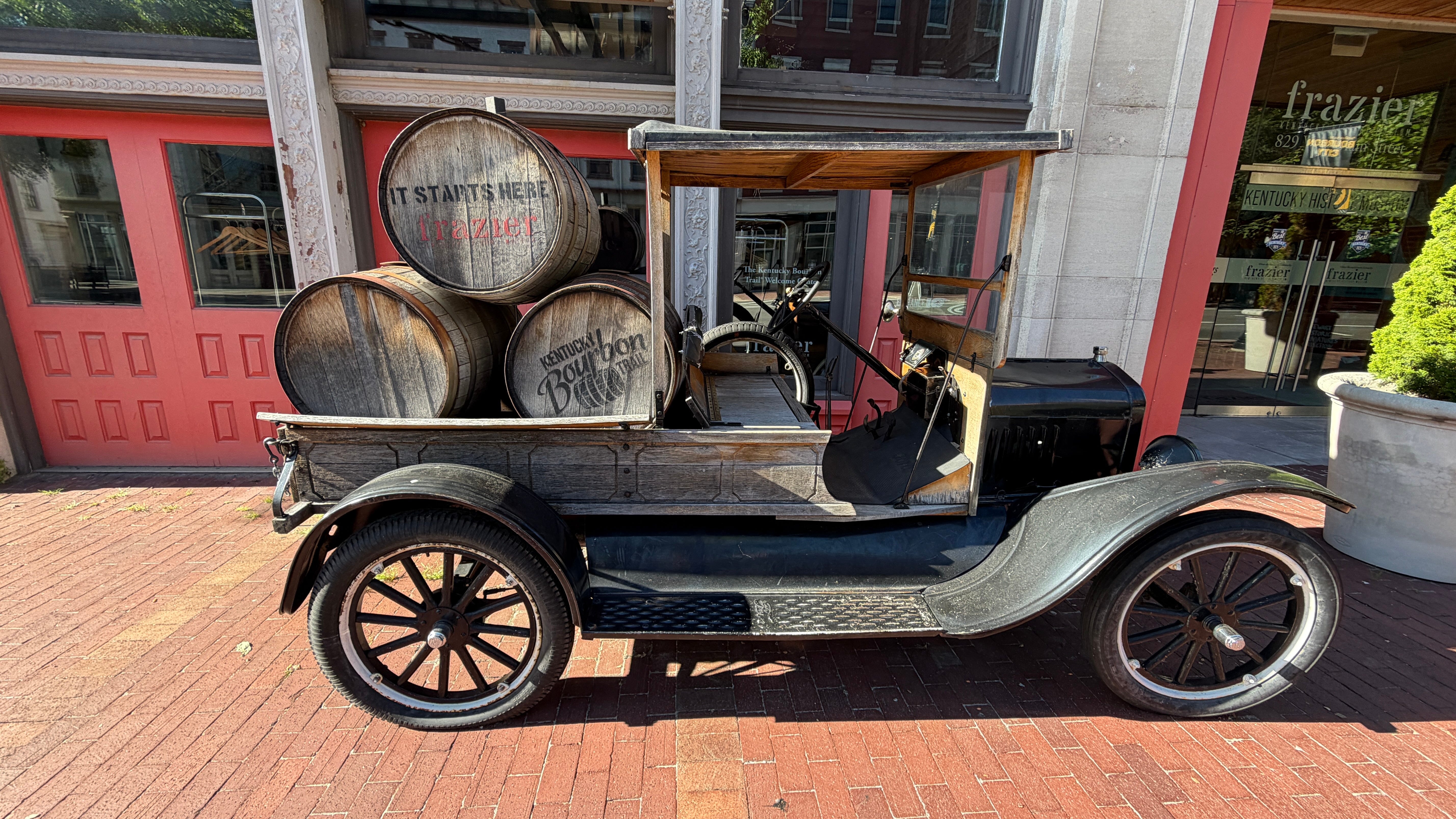
If you’re like most visitors, you’ll want to get in a distillery tour on your first day. Louisville’s Whiskey Row is packed with several big-name bourbon experiences, including Old Forester Distilling Co. at 119 W. Main Street, the Evan Williams Bourbon Experience at 528 W. Main Street, and Angel’s Envy at 500 E. Main Street.
Stop 3: Lunch
You can’t come to Louisville without at least learning something about bourbon—even if you’re not much of a drinker.
But first you’ll probably want to have lunch. There are all sorts of casual places to hit up on West Main Street. We ate at Patrick O’Shea’s at 123 W. Main Street, which happens to be next door to the Old Forester distillery.
The building dates to roughly 1867–1870 and once housed whiskey businesses. The O’Shea family bought the property in 2006, restored it, and opened Patrick O’Shea’s in 2010 as a traditional Irish pub.
Louisville has become a major starting point for exploring the Kentucky Bourbon Trail, with numerous bourbon experiences available right in the city. One recommendation from our episode was to visit at least two distilleries if you have the time, preferably mixing an older operation with a newer one so you can compare them.
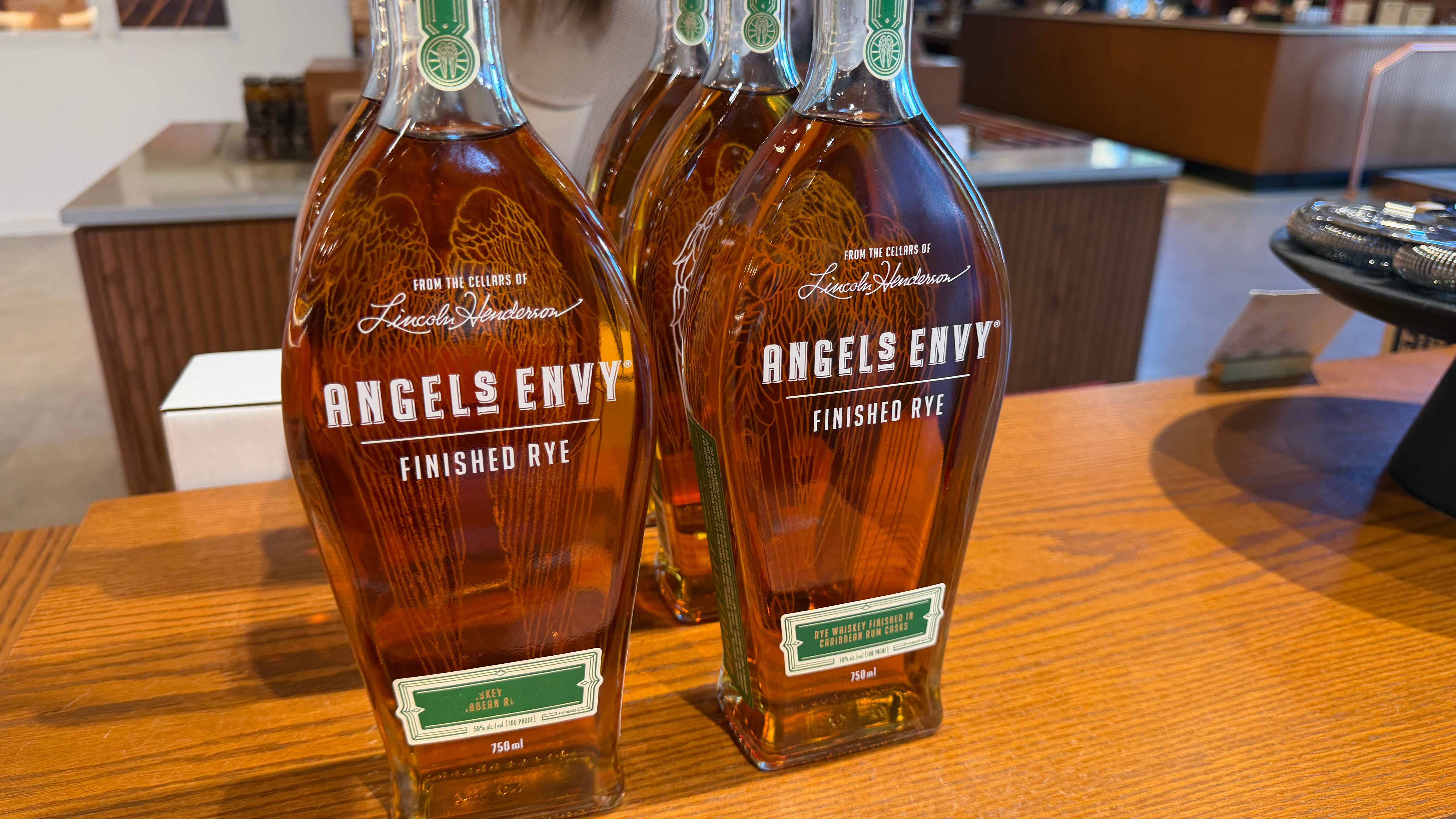
For our Photowalks episode, we visited Angel’s Envy, an urban distillery where you can see the process from mashing and fermentation through distillation and barrel aging.
That’s one of the advantages of using Louisville as your initial Bourbon Trail base: you don’t necessarily have to spend the day driving through rural Kentucky to get a real distillery experience.
And if you do want the full Bourbon Trail experience, Louisville is an excellent place to start before continuing to Bardstown, Elizabethtown, Lawrenceburg and the surrounding Kentucky countryside, some of the small towns we explored in the series.
(Watch the entire series here: https://www.youtube.com/show/VLPLOZcZTcH-TS0?sbp=KgtRVlJjQUNGcEs3SUAB)
Stop 4: Dinner in NuLu
Next, head to NuLu, short for New Louisville.
This former warehouse district just east of downtown has been revitalized into one of the city’s most walkable areas, filled with local restaurants, shops and galleries.
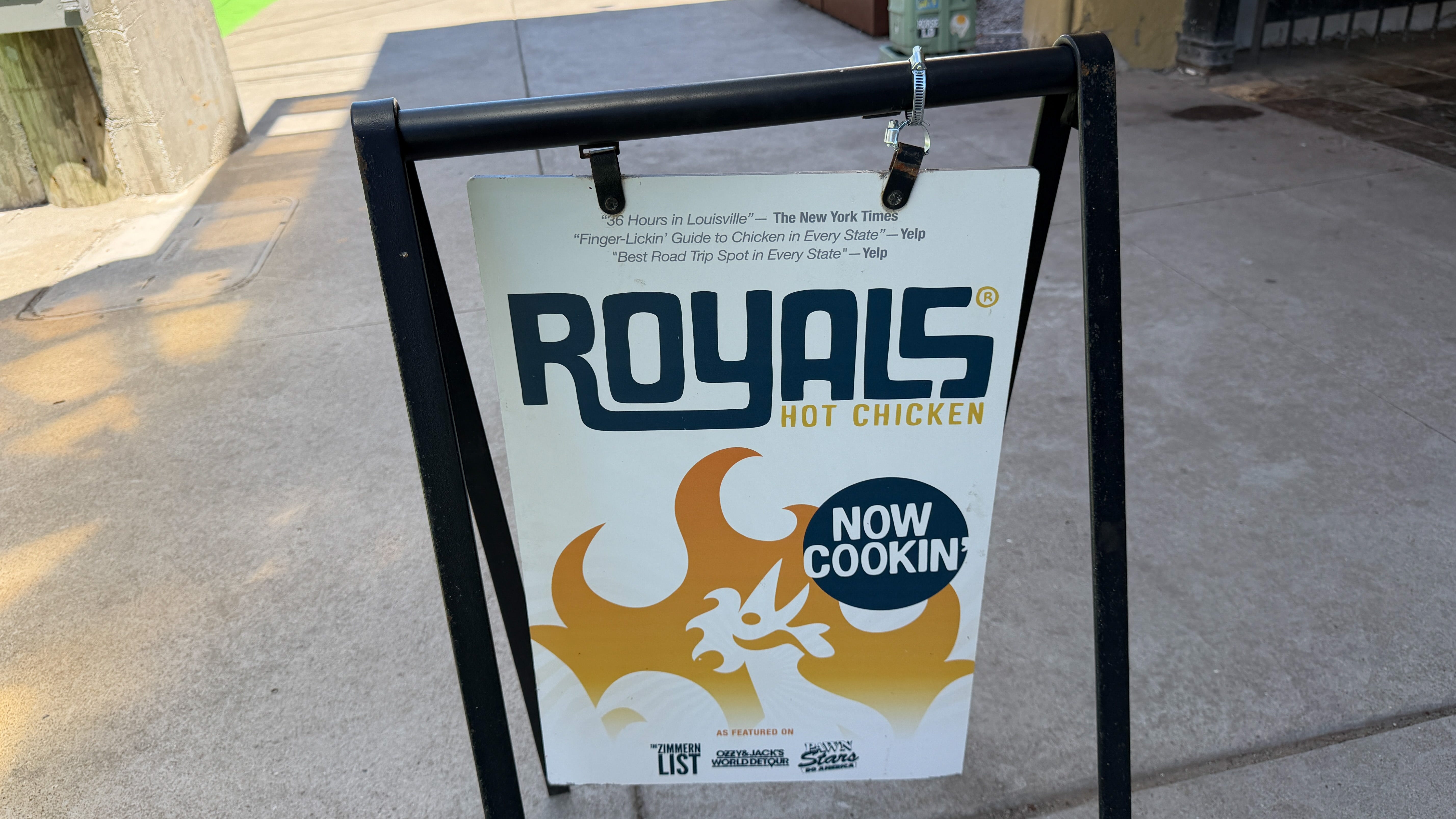
We ate at the local favorite, Royals Hot Chicken at 736 E. Market Street, whose specialty is Nashville-style hot chicken—tenders and sandwiches ranging from classic fried to increasingly spicy versions, topping out at “Gonzo.” They also do Southern sides, milkshakes and a particularly Kentucky touch: an Ale-8-One bourbon slushie.
Don’t miss!
When I was there I got a call from a friend in California, who asked what I was doing. When I told him I was eating, he asked what the fare was.
“Kentucky fried chicken,” I said.
“You went to Louisville to eat at a chain restaurant?”
“No. I’m eating fried chicken, in Kentucky.”
DAY 2: CAVE HILL CEMETERY & CHURCHILL DOWNS
Stop 1: Cave Hill Cemetery
Yes, I’m recommending a cemetery.
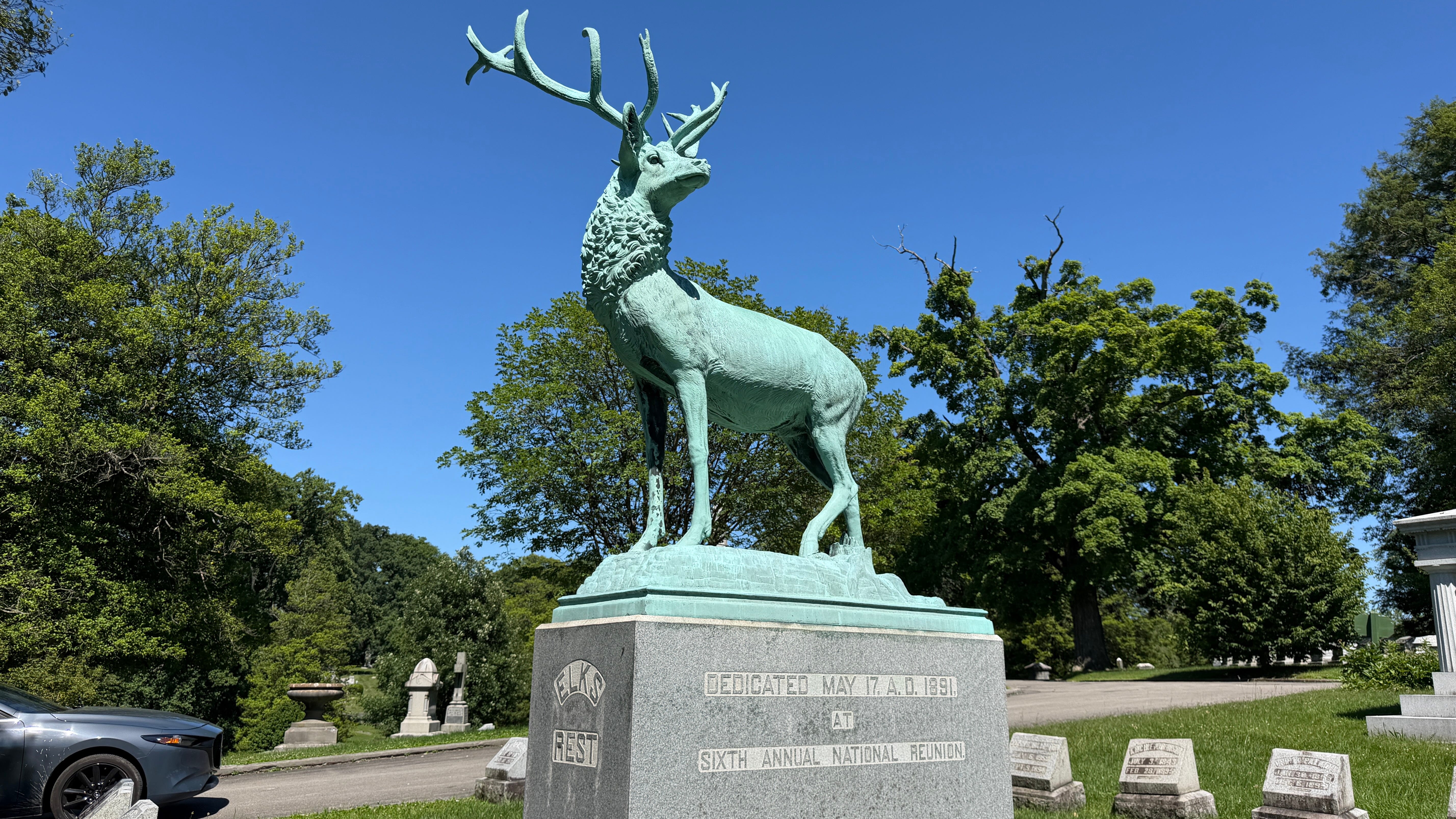
Cave Hill Cemetery is at 701 Baxter Avenue, about four miles from downtown, and is one of those places that’s worth visiting for the landscape and history alone. It’s a classic Victorian garden cemetery with rolling hills, winding roads and elaborate monuments.
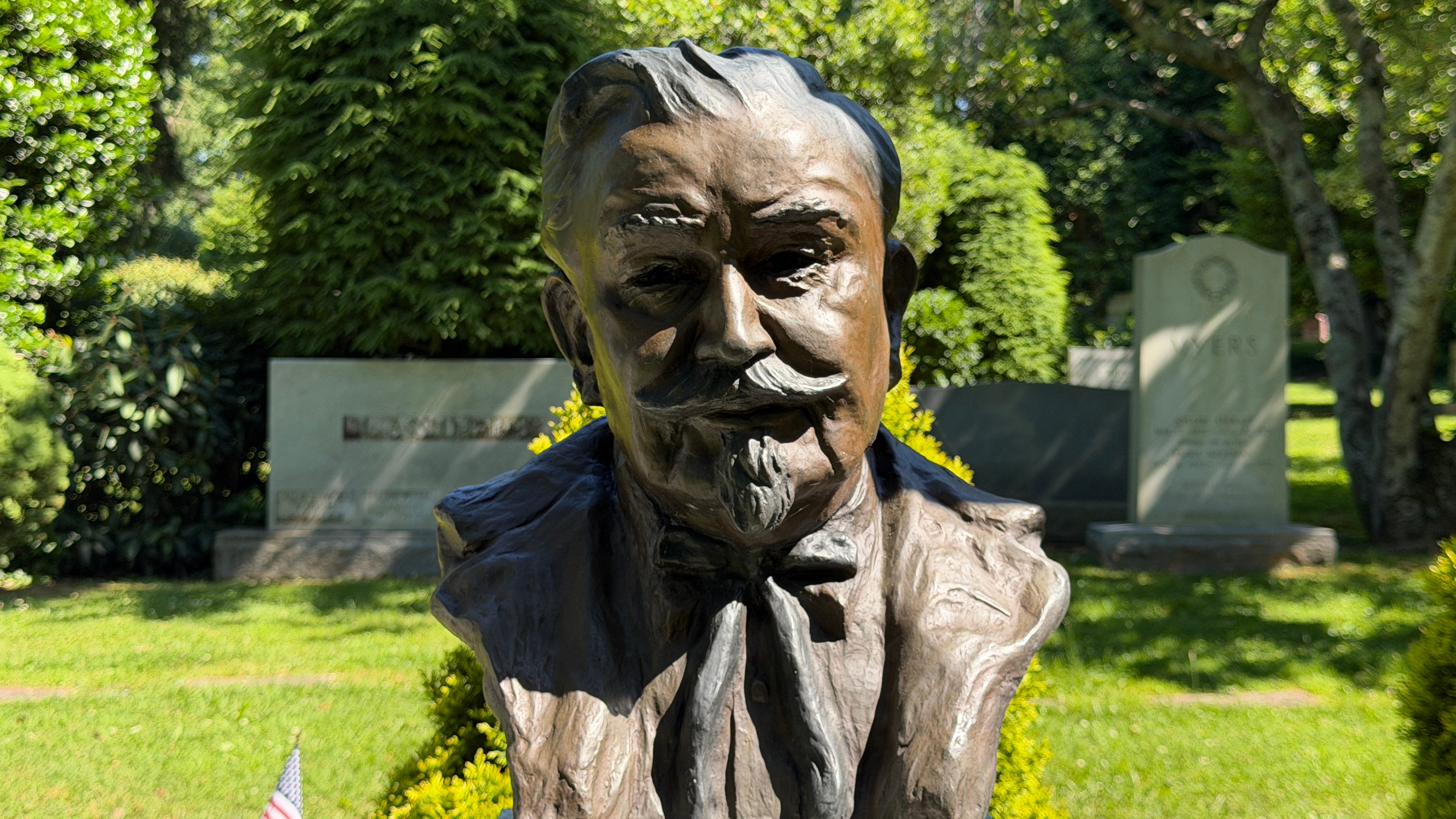
Muhammad Ali is buried here beneath a surprisingly simple marker. You’ll also find the grave of Colonel Harland Sanders—the man whose face you know from every bucket of Kentucky Fried Chicken—as well as many prominent figures from Louisville’s history.
For photography, Cave Hill is particularly good for architectural details, monuments, trees and long compositions down its winding roads.
Stop 2: Churchill Downs
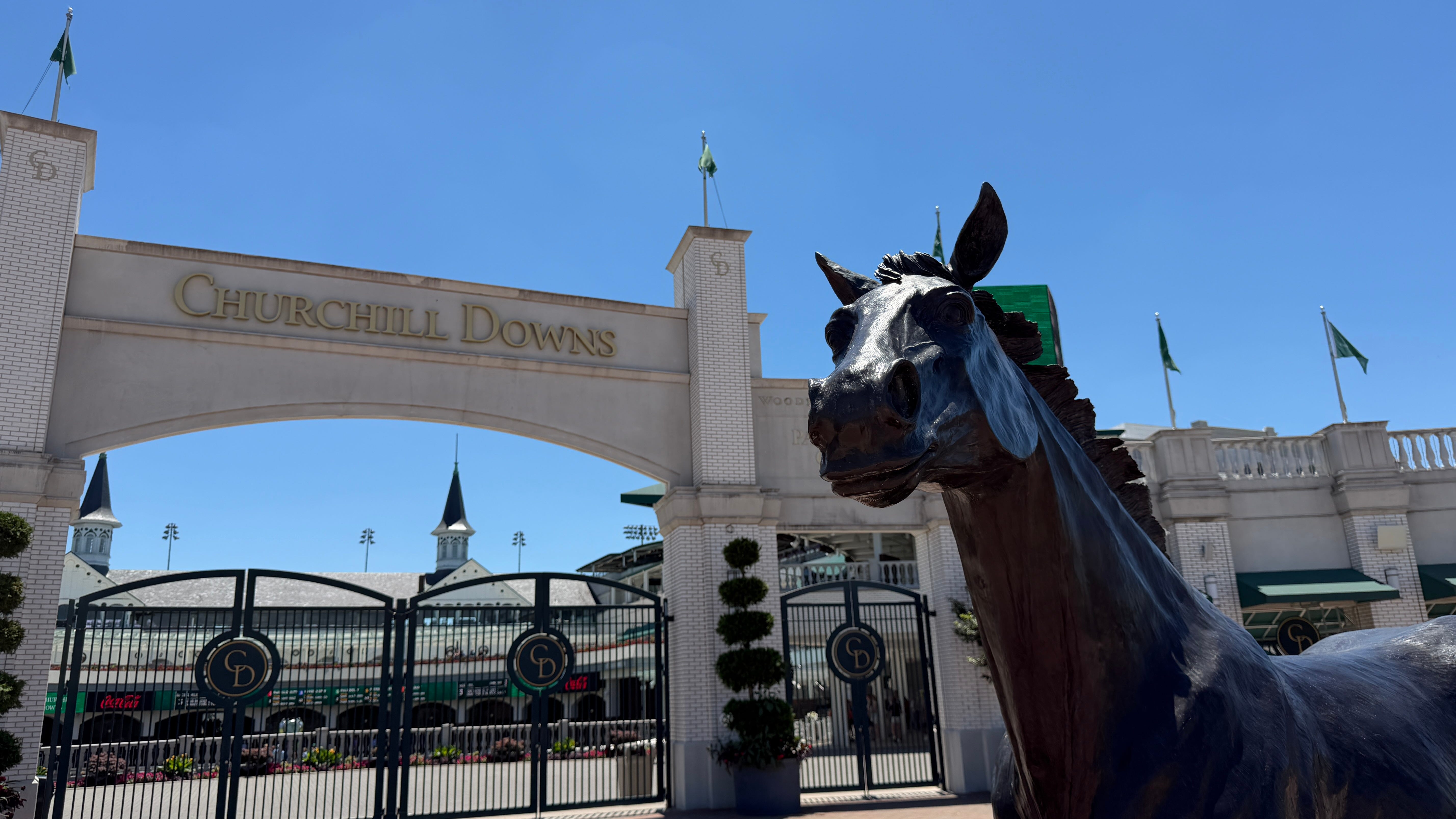
You don’t have to visit Louisville during Derby week to experience Churchill Downs.
The first Kentucky Derby was held here on May 17, 1875, and the race is now held on the first Saturday in May.
A visit gives you a much better understanding of why horse racing is so deeply connected to Kentucky. There are more than 430 horse farms around the state, and the Derby is as much a Louisville cultural institution as it is a sporting event. (There’s also something about the water, which makes horses’ bones stronger, or at least that’s what they told me.)
The Kentucky Derby Museum at 704 Central Avenue, adjacent to Churchill Downs, is also worth your time. Exhibits cover the horses, jockeys, history of the race and those famously extravagant Derby fashions.
And yes, the hats really are a thing.
What I’d prioritize if you only have one day
If you’ve only got a single day in Louisville, I’d narrow it down to four experiences:
Walk Old Louisville for the Victorian homes.
Explore NuLu and don’t miss the fried chicken!
Get to Cave Hill and explore the amazing headstones and scenery.
Walk up and down Whiskey Row and stop into at least one bourbon distillery.
That gives you four very different sides of Louisville without spending your entire day in the car.
And that’s probably my biggest takeaway from Louisville. Come for the bourbon, Derby and baseball bat, but don’t stop there. The Victorian streets, neighborhoods and Louisville history ended up being some of my favorite parts of the city.
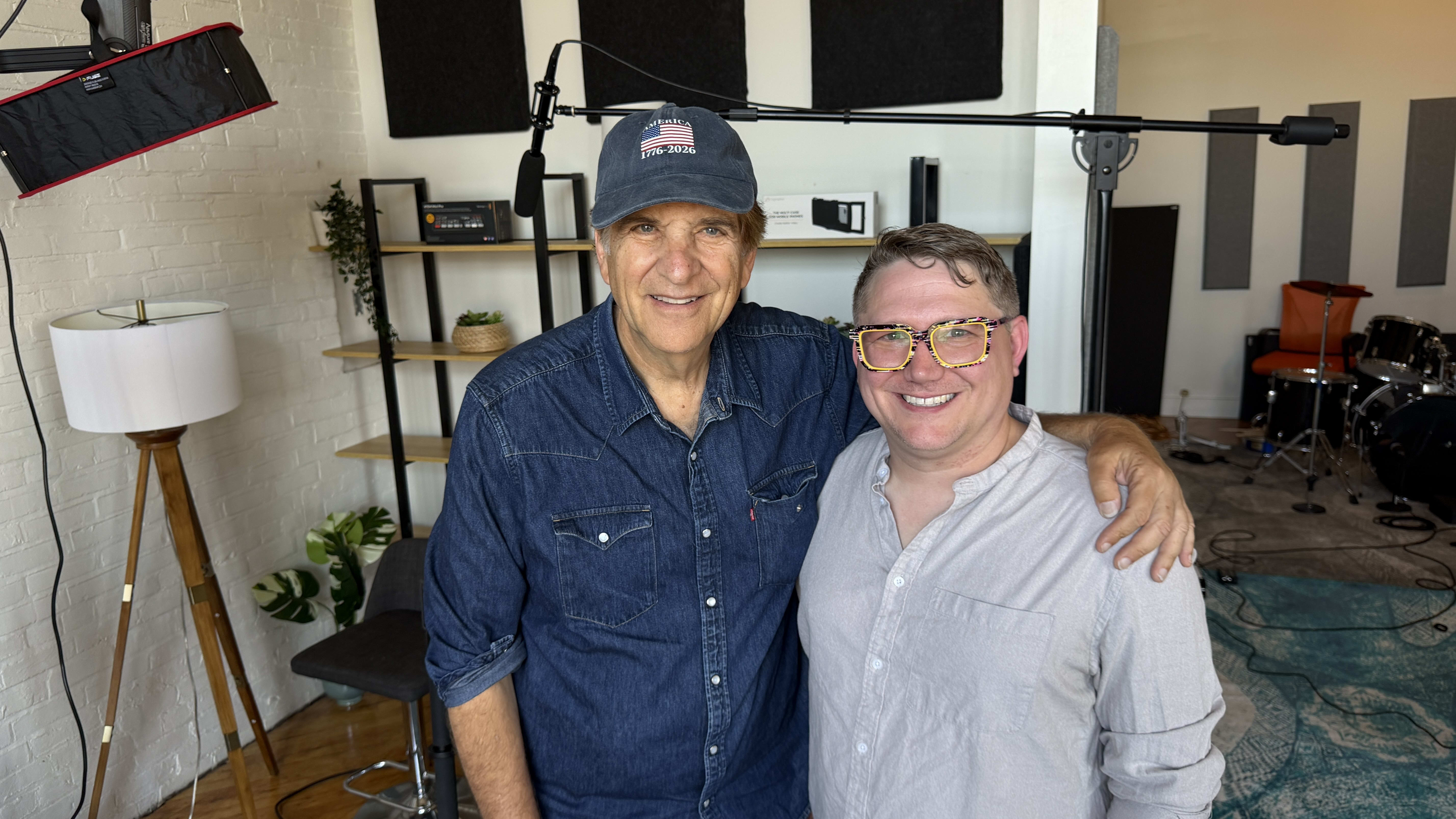
And a special shoutout to Nick Mattingly, the founder and CEO of a unique Louisville startup called Switcher Studio, which enables use of old iPhones and iPads and turns them into TV studio gear. Our photo tip segment in this episode is all about Switcher, and we show how it works during the interview.